
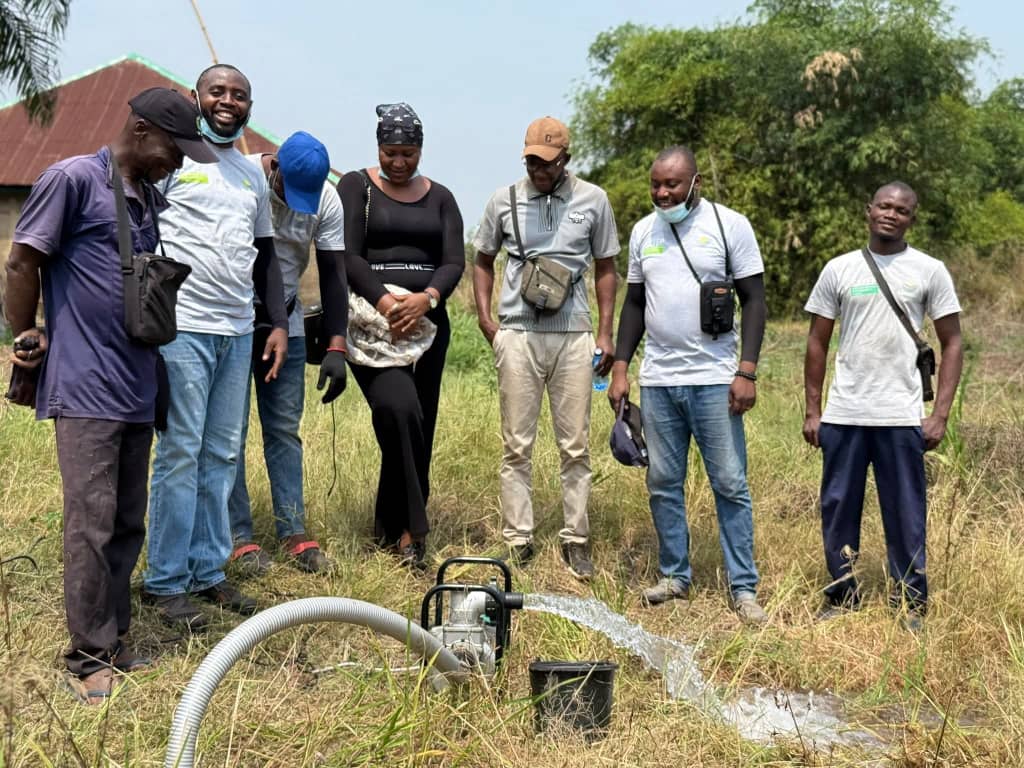
Between February 2nd and 4th, 2026, CJONYX Organisation, engaged by the Challenge Fund for Youth Employment (CFYE), embarked on a comprehensive field visit to Ibaji with a clear mission: to support the development and institutionalisation of an Impact Measurement and Management (IMM) System for the Hemam Ibaji Operation.
This initiative represents a critical step in strengthening sustainable agricultural development and youth employment outcomes within the region. Rather than focusing solely on program implementation, the visit was intentionally structured to build systems, structures, and local ownership for long-term impact tracking, learning, and improvement.
Strategic Stakeholder Engagement
A major highlight of the visit was direct stakeholder engagement with young farmers and field officers drawn from 10 different communities across Ibaji. These engagements created a platform for open dialogue, allowing participants to share real experiences, operational challenges, community dynamics, and aspirations for growth.
Young farmers spoke candidly about access to resources, production challenges, market opportunities, and the importance of structured support systems. Field officers contributed operational insights from the grassroots level, helping to connect program strategy with on-the-ground realities. This participatory approach ensured that the IMM system would not be theoretical or disconnected from lived experience, but grounded in real community needs and practical realities.
Institutionalising Youth Leadership with Gender Inclusion
One of the most significant outcomes of the visit was the formal institutionalisation of the CFYE Youth Advisory Group for the Hemam Ibaji Operation. This structure was designed to ensure that youth voices are not just consulted, but embedded in decision-making processes.
Strong gender inclusion was a core principle in the formation of the group. The deliberate inclusion of both young men and women reflects a commitment to equity, representation, and balanced leadership. This approach recognizes that sustainable development is only achievable when leadership structures reflect the diversity of the communities they serve.
By empowering young people as co-creators of impact systems rather than passive beneficiaries, the project strengthens ownership, accountability, and long-term sustainability.
Field Assessments in Unale and Atoga
The field visit also included on-site assessments in Unale and Atoga communities. These assessments provided practical insights into farming operations, production systems, environmental conditions, and local agricultural practices.
Rather than relying solely on reports or secondary data, CJONYX and CFYE teams prioritized physical observation and field validation. This approach enabled a deeper understanding of operational contexts, risks, opportunities, and community-specific dynamics that directly influence impact outcomes.
These assessments are essential for building accurate impact indicators and ensuring that measurement frameworks reflect real conditions rather than assumptions.
Co-Creation of Impact Indicators
A key milestone of the visit was the co-creation workshop focused on validating impact indicators for the IMM system. This collaborative session brought together stakeholders, youth representatives, and field officers to jointly define what “impact” truly means in the Hemam Ibaji context.
Instead of imposing predefined metrics, participants worked together to identify indicators that reflect:
Youth employment outcomes
Agricultural productivity and sustainability
Income stability
Skills development
Gender inclusion
Community resilience
Food security
This participatory design process ensures that the IMM system is locally relevant, credible, and actionable. It transforms impact measurement from a reporting obligation into a learning and decision-support tool.
Laying the Foundation for Long-Term Impact
The Ibaji field visit did more than complete activities—it built foundations. Foundations for collaboration. Foundations for accountability. Foundations for learning. Foundations for sustainable impact.
Through community engagement, leadership institutionalisation, field validation, and shared learning processes, CJONYX and CFYE have established a strong framework for effective impact tracking and management within the Hemam Ibaji Operation.
This approach positions the project not just as an agricultural intervention, but as a structured, data-driven, and community-owned development model that can scale, adapt, and improve over time.
The Hemam vision is clear: sustainable agriculture, empowered youth, inclusive leadership, and resilient communities.
Think Hemam. Think More Food.